










Inquiry

Early detection, accelerated recovery.

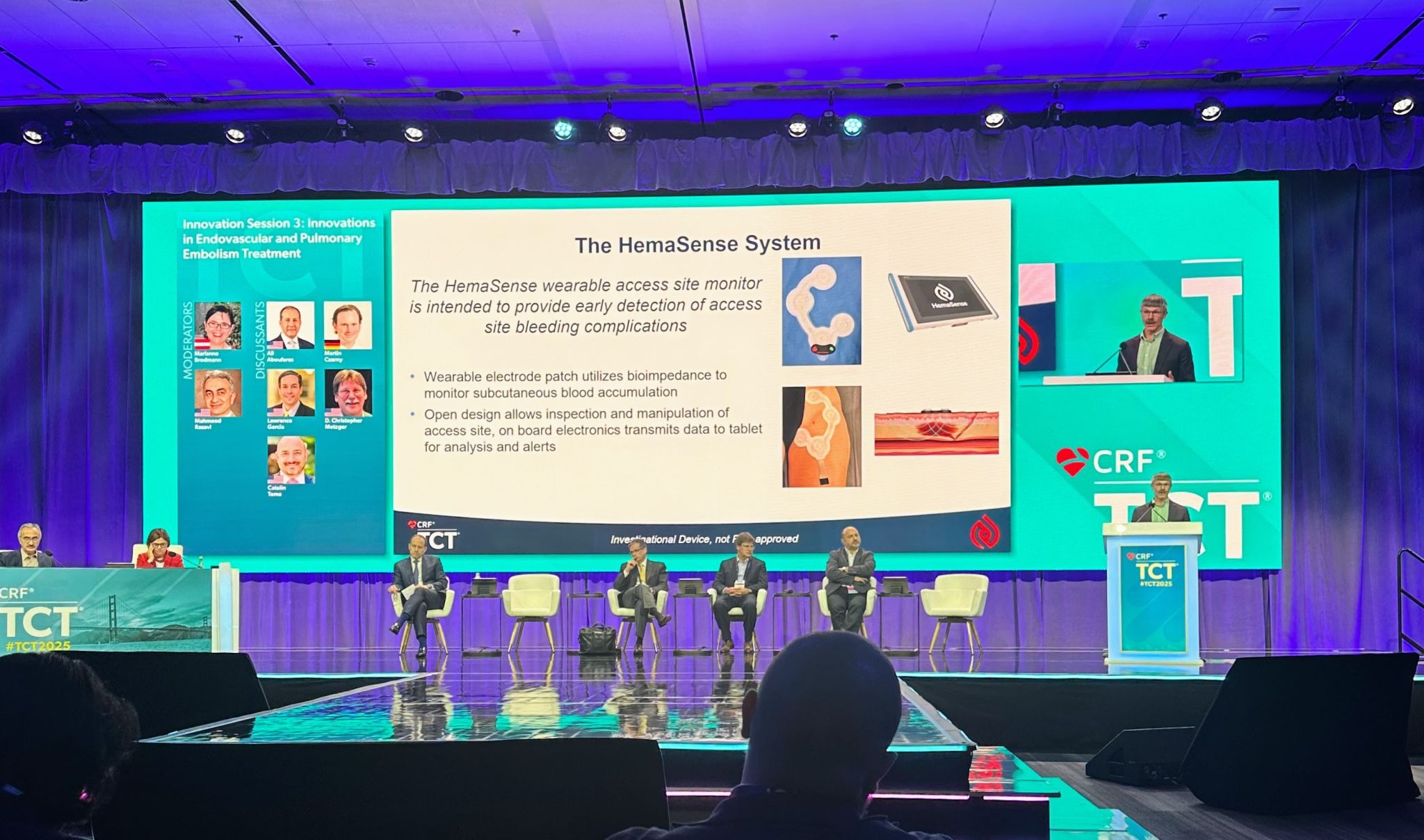
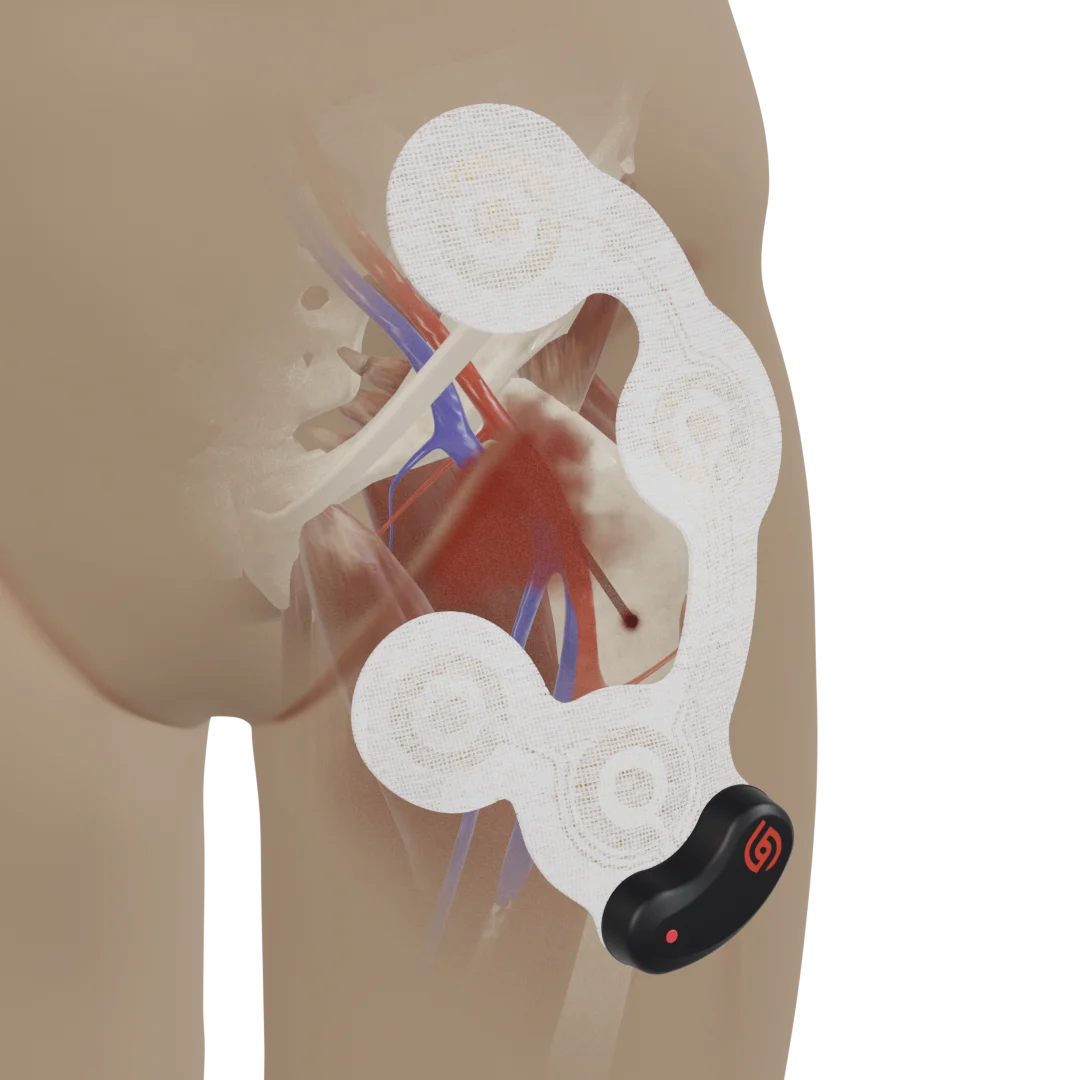
The HemaSense wearable monitoring device is designed to detect subcutaneous bleeding at the femoral artery or vein before it’s visible at skin level, accelerating treatment and recovery for patients following an endovascular procedure.

The Problem

Access Site Complications

Every year, hundreds of thousands of patients undergo life saving procedures that deliver therapy through a large diameter catheter in the the femoral artery or vein. Unfortunately, almost 1 in 10 patients will experience a clinically consequential bleed at this access site during recovery, often resulting in extended hospital stays, secondary surgeries, blood transfusions and significant cost increase to the healthcare system.

A nurse reviews care details on a tablet at the bedside of a recovering elderly patient.
9.5%

Access-site bleeding complication rate

$4.1B

Estimated annual direct cost

2.14

Additional hospital days per event

$18,695

Average additional cost per event

Sources: LSI Market Analysis; JAMA Cardiol. 2017;2(7):798–802; Circulation 2022 Jan 18;145(3):170–183.

Technology

The HemaSense Monitor

The HemaSense wearable access-site monitor provides real-time indications of a potential bleeding complication, supporting early detection and intervention.

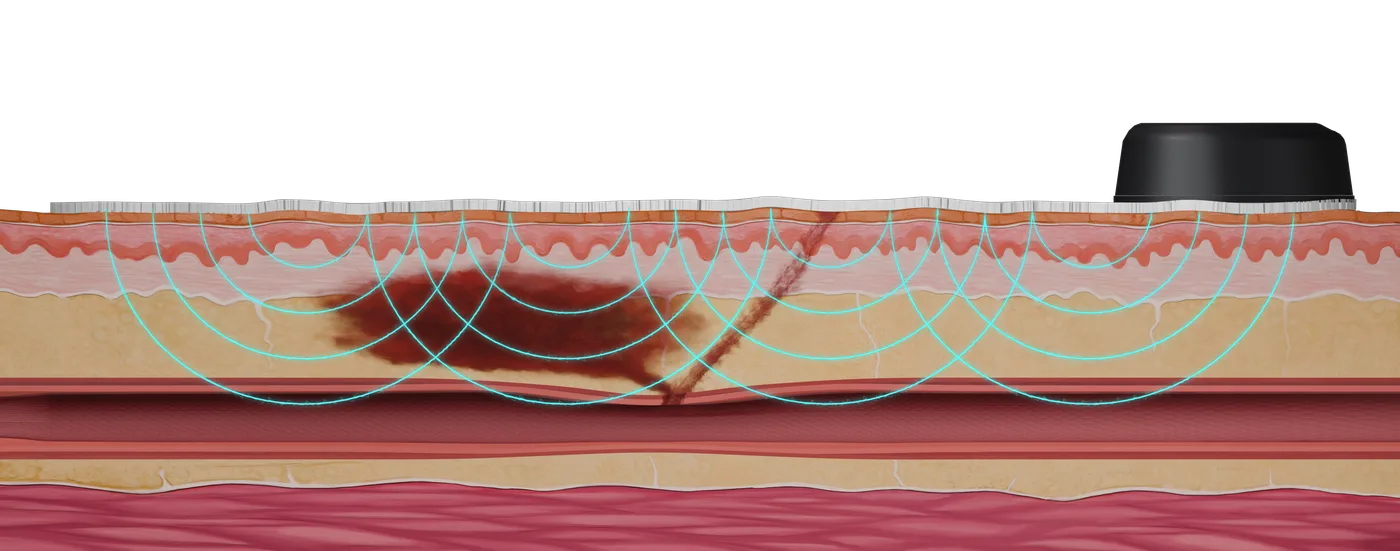
The HemaSense device utilizes proven bioimpedance sensing technology combined with multi-model motion and signal-quality monitoring. Proprietary algorithms continuously analyze these signals to monitor for blood accumulation and differentiate meaningful tissue changes from movement and noise.

Cross-section illustration: the HemaSense device sensing subcutaneous fluid accumulation via bioimpedance.
  1. 01

    Applied post-procedure

    Disposable patch placed at the femoral access site following a large-bore intervention.

  2. 02

    Monitors continuously

    Assesses impedance changes during recovery that may be consistent with blood accumulation beneath the skin.

  3. 03

    Surfaces early signals

    Highlights accumulation before they're palpable or visible, supporting earlier diagnosis and intervention.

  4. 04

    Integrates into workflow

    Wireless communication, portable display with flexible mounting options.

Outcomes

Why HemaSense

By turning access-site recovery into a continuous, quantitative signal, HemaSense helps care teams act sooner — supporting better outcomes for patients and stronger economics for the hospital.

Improved Outcomes

Bleeding complications increase mortality and morbidity and can lead to secondary surgeries and blood transfusions.

Reduced Complications

Potential complications are surfaced early, reducing severity.

Automated, Quantitative Assessment

Continuous, objective data without adding to staff workload.

Improved Efficiency, Lower Cost

Designed to support smoother recovery workflows and increase bed turnover, leading to greater efficiency.

A Paradigm Shift

Quantitative Feedback, Confident Assessments

Access-site monitoring currently relies on regular manual checks by frequently overloaded care teams, which can lead to inconsistent evaluations and delayed interventions.

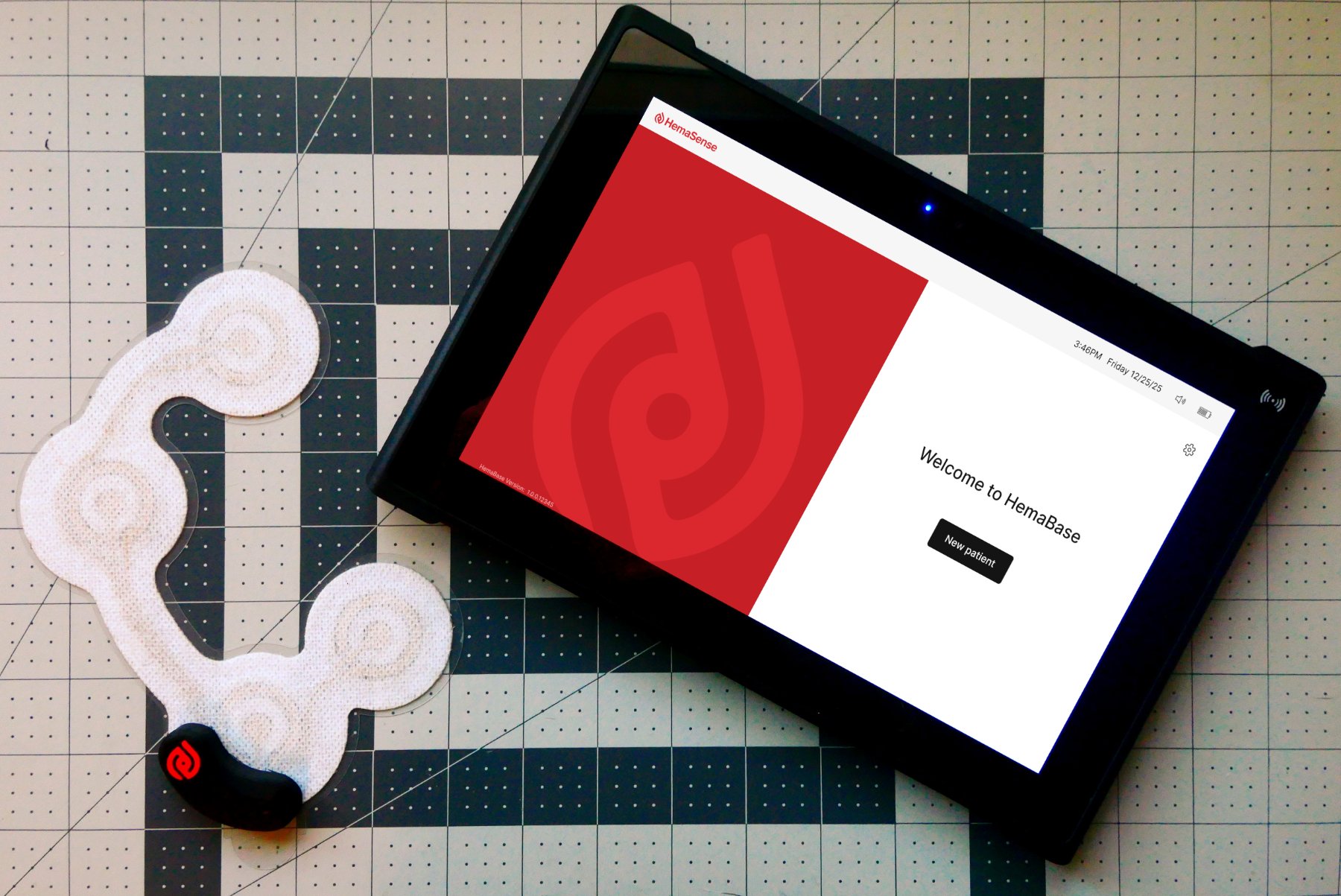
The HemaSense wearable patch and sensor beside the HemaBase bedside monitor.

Current Monitoring

  • Intermittent  — typically a manual check every 15–30 min
  • Subjective  — relies on tactile and visual assessments
  • Variable  — competes for attention on a busy unit
  • Reactive  — caught only once it's palpable or visible

With HemaSense

  • Continuous  — monitors without interruption
  • Objective  — quantitative multimodal feedback
  • Automated  — no added burden on staff
  • Early  — small changes are surfaced earlier

One signal, two advantages

Early indication

When signal changes consistent with fluid accumulation appear, they are displayed in real time, supporting earlier assessment of a potential bleeding complication.

Continuous monitoring

For the many patients recovering normally, continuous, objective readings give the team additional information to support confident recovery decisions.

HemaSense provides a foundational data stream to support accelerated recovery.

The Opportunity

Why now?

The intersection of expanding procedure volumes, increasingly complex patients, and a growing focus on healthcare efficiency is creating new demands for continuous post-procedural monitoring.

2.4M

Large-bore procedures annually (2025)

7%

Blended CAGR, 2025–2030

3.3M

Projected annually by 2030

01

Expanding applications

New structural heart, vascular, and electrophysiology therapies continue to drive significant growth in large-bore access, with many of the the newest devices using the largest catheters yet.

02

Higher-risk patients

Older, sicker, and more complex patients are undergoing procedures that were once reserved for lower-risk populations.

03

Value-based care

Health systems are increasingly focused on reducing complications, shortening hospital stays, and improving operational efficiency.

Large-bore procedure volume by type

Thousands of procedures, 2025 vs. projected 2030

2025 2030 (projected)
0 200 400 600 800 1000 1200 1400 Heart Valve EVAR/TEVAR MCS Septal Occluder LAAO Leadless Pacemaker Heart Valve — 2025: 1,150 → 2030: 1,380 (1000s of procedures) EVAR/TEVAR — 2025: 640 → 2030: 720 (1000s of procedures) MCS — 2025: 120 → 2030: 330 (1000s of procedures) Septal Occluder — 2025: 260 → 2030: 330 (1000s of procedures) LAAO — 2025: 130 → 2030: 330 (1000s of procedures) Leadless Pacemaker — 2025: 90 → 2030: 210 (1000s of procedures)

1000s of procedures (2025 / 2030). Source: LSI Market Analysis.

Traction

Progress toward commercialization

HemaSense has systematically reduced technical, clinical, regulatory, and market risk while advancing toward commercialization.

Technology

Platform established

  • Hardware design finalized and in pilot-scale manufacturing
  • Integrated software platform operational
  • Intellectual property portfolio protecting core innovations

Clinical

Validation underway

  • Preclinical feasibility demonstrated
  • Clinical data collection study initiated
  • First patients enrolled in clinical evaluation

Regulatory

Pathway established

  • FDA De Novo pathway confirmed
  • Quality system implemented
  • Design controls initiated

Market

Market validation underway

  • Healthcare systems engaged in development activities
  • Strategic industry relationships established
  • Commercialization planning underway

People

Team

A team of medical-device operators, clinicians, and engineers who have designed, validated, and brought complex devices to market.

Leadership

Core Team

Advisors

The latest

News & Announcements

Building the standard of care for access-site monitoring.